The ideal target range for indoor humidity is 30-50%. If it drops below the 30% level, the dryness encourages a number of health issues like dry skin, eyes, and throat. It can even encourage breathing issues by drying the lungs and breathing pathways. Dry indoor air also cracks wood in furniture. Likewise, static electricity is more common in a dry environment.
Conversely, a relative humidity (RH) level above 60% encourages mold growth. That leads to excess dust, and mold spores that trigger allergies and asthma. Your house also just feels sticky, especially on hot summer days.
The good news is that the right combination of dehumidification and humidification can keep your house in that perfect range for maximum comfort. Here is a closer look at what Florida homeowners in particular need to know about setting a home’s humidity level.
 Quick Takeaways
- The ideal relative humidity range is 30-50%.
- High humidity drives mold and mildew while also making indoor air sticky.
- Low humidity encourages dry skin, static electricity, and wood damage.
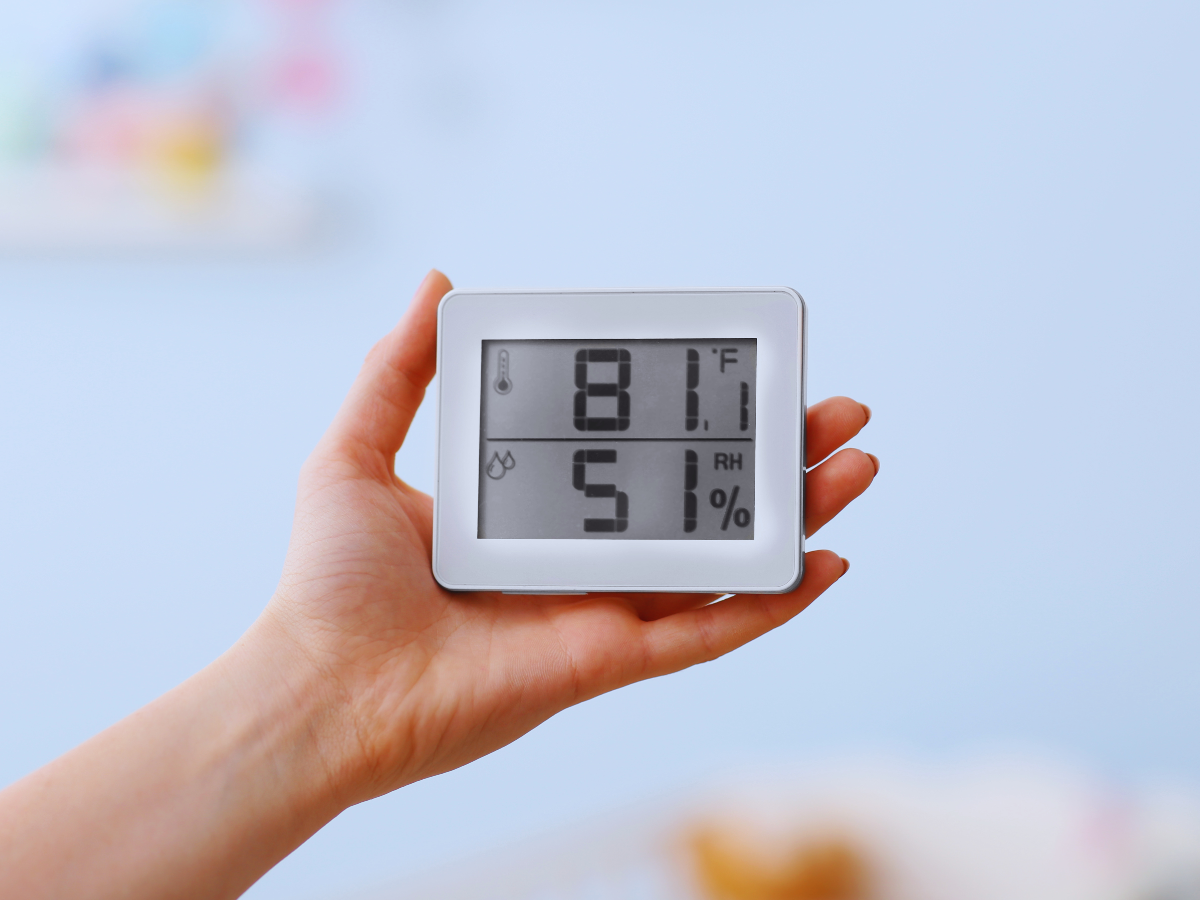
- A hygrometer measures indoor humidity.
- Whole-house humidity control allows you to target healthy RH levels.
Why Is Indoor Humidity Important?
The most basic argument for controlling indoor humidity is comfort. If you don’t want a house that feels dry or sticky, the ideal range addresses both needs. Notably, here in Florida, people rightly target dehumidifiers because of the moist climate. Given that you can overheat as RH approaches 100%, that is wise. But it leads to overlooking how uncomfortable overly dry air can be, too.
Indoor air quality is another factor. Moist air becomes an incubator for mold, bacteria, and viruses. It also captures dust and weighs it down, leading to more of it landing throughout your house.
Even if your house has a high-quality air purifier, the high humidity makes it work harder. This also negatively affects HVAC performance, leading to higher energy bills.
What Happens When Humidity Is Too High?
The industry of high humidity is 60% because this is the threshold for mold growth. However, we target 50% because it ensures that spots away from the humidistat stay dry enough to discourage mold, mildew, and sticky air.
Wet air has a higher thermal mass, too. This means it takes more energy to cool your house one degree in a sticky room than in a dry one. Once more, this drives up HVAC and energy bills.
What Happens When Humidity Is Too Low?
Low humidity’s main threat is drying skin, which can dry out your nasal passages and sinuses. It also dries the eyes, lungs, and breathing pathways.
Dry air is ideal for creating static electricity, which is annoying. Wood flooring and furniture are more likely to crack, too, because they need a certain amount of moisture to maintain their shape.
How Can You Measure Indoor Humidity?
Hygrometers and humidistats allow you to track the indoor relative humidity level of your house. Many modern smart thermostats have support for such sensors and also operate a dehumidifier and a humidifier. This ensures that you achieve an optimal humidity level at all times.
This is especially valuable if anyone in your house is dealing with health issues. Conditions like asthma and COPD, for example, are especially sensitive to high and low humidity levels.
Many newer thermostat and sensor packages now include indoor air quality monitors, too. This allows you to look beyond the simple RH number.
How to Maintain Healthy Indoor Humidity
 HVAC maintenance is the best way to keep indoor air healthy. AC systems already provide respectable dehumidification, and you may be able to get by without adding a dehumidifier. Regular filter changes and annual tune-ups keep the HVAC in top operating shape.
Improved ventilation helps, too. Modern homes are often tightly insulated, and adding a fan to your HVAC is a good way to encourage more fresh air. Combined with sealing air leaks, ventilation can provide an efficient way to keep indoor air clean.
A whole-home dehumidifier is an important part of your larger IAQ profile. Especially here in Florida, AC systems often struggle to keep up.
Adding a dehumidifier allows your AC to focus on its main task. Whole-house humidifiers are also useful, especially if dry air becomes uncomfortable in the winter.
Frequently Asked Questions
Is 60% humidity too high indoors?
Yes, 60% is the level where mold formation begins. If you have a 60% reading on your thermostat, there are almost certainly other areas of your house that are worse. We recommend a target of 50% or lower.
What is the ideal humidity level in Florida?
The ideal target for Florida homeowners is 30-50% RH.
How can I lower humidity in my home?
Start with replacing your air filters and scheduling HVAC maintenance. If that doesn’t solve the problem, the next step is improving ventilation and tightening your home’s insulation. A dehumidifier may be necessary, especially if you live in a high-humidity area.
Can my air conditioner control humidity?
Many air conditioners are more than enough to control the humidity level. However, an AC doesn’t serve as a humidifier. Also, an AC may need some help from a dehumidifier.
Improve Comfort With Better Humidity Control
 One Hour Air Conditioning & Heating is the go-to HVAC company for many in Melbourne, FL. This region’s high humidity levels present unique challenges for indoor comfort, but our technicians have solutions. We’re always on time or you don’t pay a dime. Inquire about our many whole-home dehumidifier installation and indoor air quality options.
If you’re concerned about humidity, health, and comfort in your Melbourne house, contact One Hour Air Conditioning & Heating right away to schedule an indoor air quality evaluation.